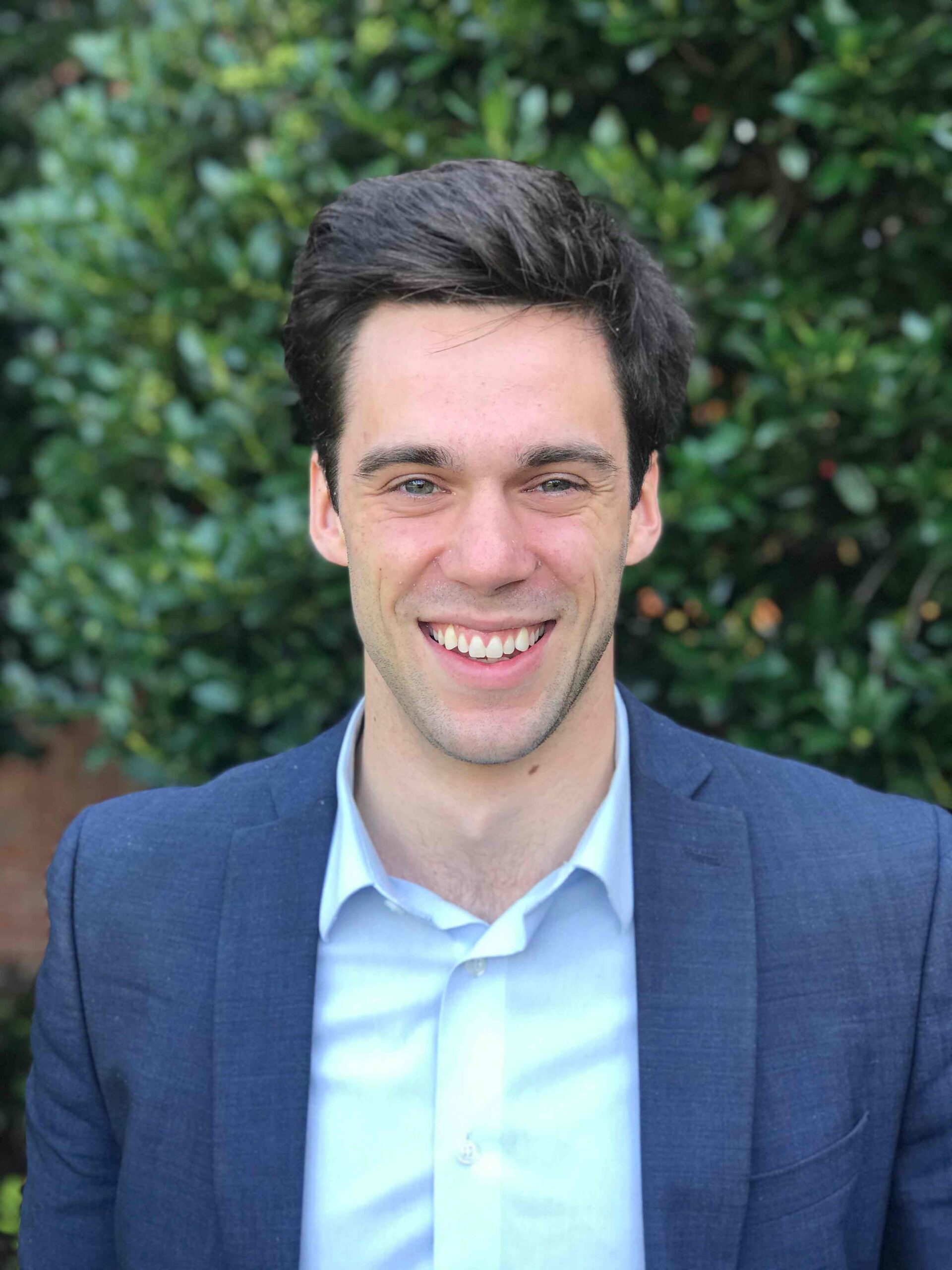
One of the country’s most accomplished twenty-somethings, Nail’s resume reads like a College Board directory of national and international awards and scholarships. But like any other member of Generation Z, his internal dishonesty detector is fast, accurate, and ruthless — even when he aims it at himself.
In his relatively short time here on earth, Nail has personally served multiple underserved communities on three continents. He has spearheaded several organizations to do the same. Lead For America is his ambitious initiative that aims to catalyze local community revitalization nationwide through experiential training, civic leader fellowships, and government advocacy.
Joe Nail was raised in Overland Park, Kansas. His mother worked as a nurse, and his father as a military contractor. When his dad was deployed to Afghanistan, the gifted teen became a primary caretaker for his neurologically disabled sister.
In doing so, he quickly learned the crucial role that public institutions play in the lives of the disabled and disadvantaged, and their families, particularly at the local level. He had already been focused on service for some time, winning school elections and being featured by local news outlets as “Not Your Average Joe.” But suddenly, government policy and leadership became intensely personal for the talented young man.
Before heading to college, he worked in Germany on initiatives at the local, state, and federal government levels while volunteering as a firefighter and as an English & German teacher for Syrian refugees. While an undergrad in political science and entrepreneurship at the University of North Carolina at Chapel Hill, he co-founded FairEd, a college-access non-profit that helps low-income and first-generation high schoolers enter college.
A Morehead-Cain, National Merit, and Coca-Cola scholar, Nail also interned at a conflict-resolution organization in Sierra Leone and worked with Congressman Jim Cooper in Washington, D.C. In only 2.5 years, he earned his degree, graduating Phi Beta Kappa and with the highest distinction.
To date, Lead For America has raised $4.5 million to launch the civic leadership careers of an intentionally diverse set of over 300 young people nationwide, including over 100 fellowships. Nail’s goal is to train and equip a generation of Americans — one million by 2040 — to be outstanding civic leaders in the communities they call home, including 50,000 through Lead For America’s flagship paid Fellows program.
That may sound like a lot. But after speaking with him recently, we’re pretty sure Joe’s got this nailed.
Monica: When did you discover your calling to co-found Lead For America?
Joe: The decision to start the organization happened in 2017, but the roots of the calling happened quite a bit earlier. The year I was a sophomore in high school, my dad was told that his contract working with the military would end unless he deployed to Afghanistan for a year. So he was deployed.
I’m sure you’ve had moments in your life where you’ve been confronted with a situation or a challenge that forces you to grow up a bit faster than you were expecting. That was certainly the case for me. My mom was a nurse, my dad was serving in Afghanistan, and I realized I, too, was interested in a career in public service.
I also noticed that government and policy had a profound impact on my life, my family’s, and my community’s. My older sister, Katie, has a severe intellectual disability, cerebral palsy. I was beginning to understand the essential nature of strong, moral leadership in our public institutions. That year was a formative period.
My second formative period was between high school and college; I spent one year in Germany on a Congress-Bundestag scholarship. This was right when the German government had decided to accept and integrate a million Syrian refugees in a single year.
To see a country that went from extreme discrimination 75 years ago — including exterminating people like my older sister during the Holocaust — to a policy of opening up and welcoming folks who really needed help was incredibly inspiring.
Throughout college, I tried to surround myself with people who wanted to go into public service and were passionate about serving their hometown communities. Getting ready to graduate, these people’s core convictions of wanting to serve hadn’t changed. But many of them opted not to go into public service — simply because the pathways didn’t exist.
I realized this lack of a pathway was a massive problem. If we want to address our communities’ big challenges and build effective public institutions, we need to mobilize tens of thousands of outstanding, dynamic, and moral young people.
Monica: What skills does a young person need to help solve the challenges we face today?
Joe: First is an overall understanding of the actual challenges facing the country and local communities. To know what resonates with you and where you’re going to be, you should try to understand the specific challenges — whether housing, education, homelessness — and how they are manifesting in your community or the country. Part of this understanding comes from your background and education.
The next skill needed is a strong moral grounding. If someone has had formative experiences serving their neighbors and learning to listen to them, the character and morality they’ve cultivated will strengthen as they take on more responsibility. That core grounding in morality, and a focus on character and doing the right thing, are essential.
A desire to listen before acting is essential. When you’re starting — and this has certainly been the case for me in building Lead for America — there is so much you don’t know. Assuming you don’t know, being willing to ask questions and having a beginner’s mindset are essential skills for anyone entering public service.
A long-term commitment and the patience that goes with it are also huge components. Change does not happen overnight, whether at the neighborhood level or the national level. People need awareness of this and the willingness to be patient.
Staying optimistic, staying hopeful, and realizing that to do anything worthwhile, you’re going to have to do uncomfortable things. Understanding that ultimately, the world can and will become a better place if you’re focused on making it so.
Monica: What are the key elements to Lead For America’s approach to bringing change?
Joe: We have three core programs: Education, Pathways, and Systems Change. The education program is based on the idea that we can inspire a generation of young people to lives of service if we can reach them when they’re still in high school or college and help them see what a life of service actually looks like. What’s essential for doing public service? What are the challenges in their communities?
In GovChallenge, our core Education program, we work with local leaders — a mayor, a city manager, or a state leader. We ask them to document their community’s key challenges. That forms the basis of a case study or problem that students from a local high school or college will investigate. They’ll get out into the community, learn more about that challenge, and then propose potential solutions directly to the local leaders. Then we facilitate internship teams that help implement their solution.
The second program is called Pathways. This is for people getting ready to enter the workforce who want to serve but don’t have a pathway to do so. Our core program is a fellowship for folks ages 21 to 30 to serve in high-impact, local government, and civic leadership roles in their hometown communities.
By the end of this summer, we’ll have over 100 young people who are serving full-time, paid, two-year fellowships in their hometown communities. This includes front-end training opportunities. After those two years are up, we help them stay in the communities. We provide them with funding and resources to help them run for office, start a business, or launch a non-profit. We really cultivate those lives of service.
The third program, Systems Change, focuses on policy and advocacy. Even if we scale our Education and Pathways work to serve hundreds of thousands of people, which we hope to do, we also recognize that there will be many more young people we can’t reach. Some of those barriers relate to student loan forgiveness and the cost of higher education. Some people can’t make that career choice if they’re coming out of school with significant debt.
So, we advocate for policies like national service, making it possible for young people to start a business or provide a local service and have it recognized as an essential good, special training resources, or at least a lower student debt burden.
Monica: How does one become a fellow?
Joe: By August 2020, we’ll have over 100 fellows serving full-time in their communities around the country. We do a nationwide search for outstanding young people who meet our criteria. We look for dynamic leaders with a track record of leading programs at their high school or college, or in their communities.
We look for people who are locally rooted with a strong connection to a specific community, whether it’s their hometown or where they go to college, and who want to continue serving those communities. We look for strong character, as demonstrated through references and how they spend their time; people who are clear that it’s not about them but about serving the community.
We have thousands of gatekeepers on college campuses, in public service organizations, and elsewhere across the country who will refer outstanding candidates to us. So that’s one way we actually get referrals. A second way is through partnerships with organizations or institutions that already do a great job of assembling or recruiting outstanding leaders.
That means recruiting people from the military and those who have come through programs like the Truman Scholarship, the Gates Millennium Scholarship, or the Udall Scholarship Program. We also do direct outreach and recruitment. We use platforms like LinkedIn and Handshake to identify people who have those qualities. Then we have a multi-step application process to determine how candidates align with those criteria.
Candidates explain why they want to serve, where they see themselves in five or ten years, and how the fellowship could play a role in that goal. Our application requires them to produce an excellent cover letter and a video about their personal story and why they want to serve. These are most effective in helping them get full-time public service employment.
Even for folks who don’t get selected, we still try to make introductions and put them in the best possible position to get full-time public service employment where they want to serve.
Monica: The diversity of your current fellows allows you to bring varying ideas to the table based on who they are and where they are from.
Joe: Exactly. A core part of our program is recognizing that communities and public institutions work best when they build on each community’s unique perspectives. In many cases, the existing pathways into public service, especially leadership roles, are more limited for people who come from rural backgrounds or low-income backgrounds, or for people of color, women, or even military veterans.
So we’re really proud that over half of our fellows are people of color, over half are women, over 40 percent were Pell Grant eligible in college, and about a third are first-generation college students. In addition to being extraordinarily qualified, dynamic moral leaders, they’re also people who really represent America and their communities. They bring actual firsthand experience in facing educational or socio-economic challenges into their workplaces. This hopefully results in far better outcomes for the entire community.
Monica: Needed changes today require innovative thinking with solutions that are cost-effective yet long-lasting. How does Lead For America position itself as such a solution?
Joe: That’s such an important point. We can tell governments or communities that, for the same cost as hiring an entry-level employee, we can identify a slate of well-trained, well-supported candidates from their community. We provide five weeks of graduate-level coursework and training. They’re part of an ecosystem or community that wants to be there for the long term.
So you’re not investing only to see this person leave after two years. You’re investing in a future community leader who will likely be transformative and engaged locally for decades. That’s what’s helped us get 50 communities in our first year, even without proof of success.
The results will determine whether we can continue. We’re proud that today, 100 percent of our hosts say they’re satisfied with the program. Ninety-six percent of our hosts rank their fellows in the top quarter of their entry-level workforce. Over 92 percent see their fellows as transformational leaders in their communities. Nine-three percent of our fellows remain committed to serving their communities for the long term.
Monica: Your program is truly working.
Joe: We can always do better. But I’m really proud of our team and the incredible work that fellows are doing every day to make their communities stronger.
Monica: How can Lead For America help eliminate entrenched beliefs and fears that have crippled communities from becoming what they were meant to be?
Joe: It’s a delicate balance. It is important to have new ideas and an openness to change simultaneously. It’s also important to recognize the traditions and practices that a community holds dear.
Every community would be well-served by welcoming immigrants or newcomers from other parts of the country, integrating them, and ensuring their full civic participation. Our program plays a unique role in facilitating that balance because all our fellows serve communities or regions where they’ve already lived.
So they already have a connection and an understanding of the assets that their communities can build on. And as they’ve been outside of that community through college, employment, or the military, they can see what could change. They can provide a unique bridge between resources, ideas, and relationships from outside the community that in other cases may not be welcome.
Monica: What is your vision for the future?
Joe: We’d love to scale our education program to reach over 100,000 students per year. That sort of scale, ideally, would be concentrated first in a single state before expanding nationwide. Whether it’s Lead For America, a coalition of organizations, or the policy changes we support, we would love for every student in this country to emerge from the public education system with an understanding of the challenges facing their communities and a tangible experience of taking action to address them.
Monica: I’m confident you’ll meet your goal; many young people are looking for opportunities to serve, but they don’t know how to get started.
Joe: We’re getting 20 or more applications for every fellowship position. I talk to other organizations like ours, and the demand is overwhelming. The dominant ethos of our generation is wanting to step up and serve. I think that should and can be the defining feature of how my generation is remembered, for example, in responding to the coronavirus pandemic as opposed to spring break parties, or other news items, which represent only a small fraction of the total.
Monica: What areas of need does your organization focus on?
Joe: Everything that a local government is responsible for. We have fellows working on universal pre-K and workforce development in Jackson, Mississippi. We have a fellow who is working on rehabilitation for folks suffering from substance abuse and opioid addiction in Appalachian West Virginia. We have a fellow who’s working on housing and homelessness issues in Los Angeles. About a third of our fellows are in rural areas and communities of fewer than 10,000 people; about a third are in mid-sized cities; and about a third are in very large cities.
The specific work ranges from these issues to things like water and waste management. That may not sound appealing on the surface, but they are quite literally essential to making sure that our communities have clean water, which, as we’ve seen in Flint and other places, cannot be taken for granted.
Monica: Would you mind closing with your final word?
Joe: Loving your neighbor is a simple, radical, profound, and beautiful call. The concept of “love your neighbor” is so simple. Everyone has a neighbor. Everybody has people they’re surrounded by. It doesn’t call you to do anything other than offer what you have at the moment.
The key to a healthy community — the part that supports and connects it all — is healthy, loving relationships between people. What makes this country great, what makes our communities great, what makes human nature great is our desire, our intense need, to be connected to other people and to love and serve them.
https://www.linkedin.com/in/joenail1/